Sport Science 101: What It Is, How It Works, and Why It Matters
Sport science is the systematic observation, measurement and analysis of training variables or metrics in an effort to better understand training adaptations and sport demands with the goal of improved subsequent training interventions, and ultimately, sport performance.
A marked improvement in sport performance is the key differentiator between sport science and exercise science. With the latter concerned with improved health status.
Sport science is an interdisciplinary field comprising of insight and expertise from the following:
- Exercise physiology
- Biomechanics
- Motor learning and control
- Sport psychology
- Sport medicine
- Nutrition
- Data analysis and statistics
In practice, sport scientists will often
- Use heart rate or force plate data to track athlete readiness and recovery
- Analyze movement via 2D and/or 3D tracking software to improve technique or reduce injury risk
- Test an athlete’s speed, power, or endurance to design more effective training
- Collaborate across nutrition and strength and conditioning fields to shift body composition
- Work with coaches and medical teams to plan training loads and rehab programs
In short, sport science utilizes observation, measurement and the scientific method to objectively improve athletic performance.
How to “Do” Sport Science
Though the execution of performing sport science can take many shapes, the process of sport science is straightforward. As the name suggests, sport science implementation mirrors the scientific method.
Briefly, a question is asked related to sport performance. A measure, test or observation period ensues. Data is collated, analyzed and results are interpreted. The results are disseminated and communicated, and (hopefully) applied to the athlete/team/sport moving forward.
There is significantly more nuance to the process, which we will cover below.
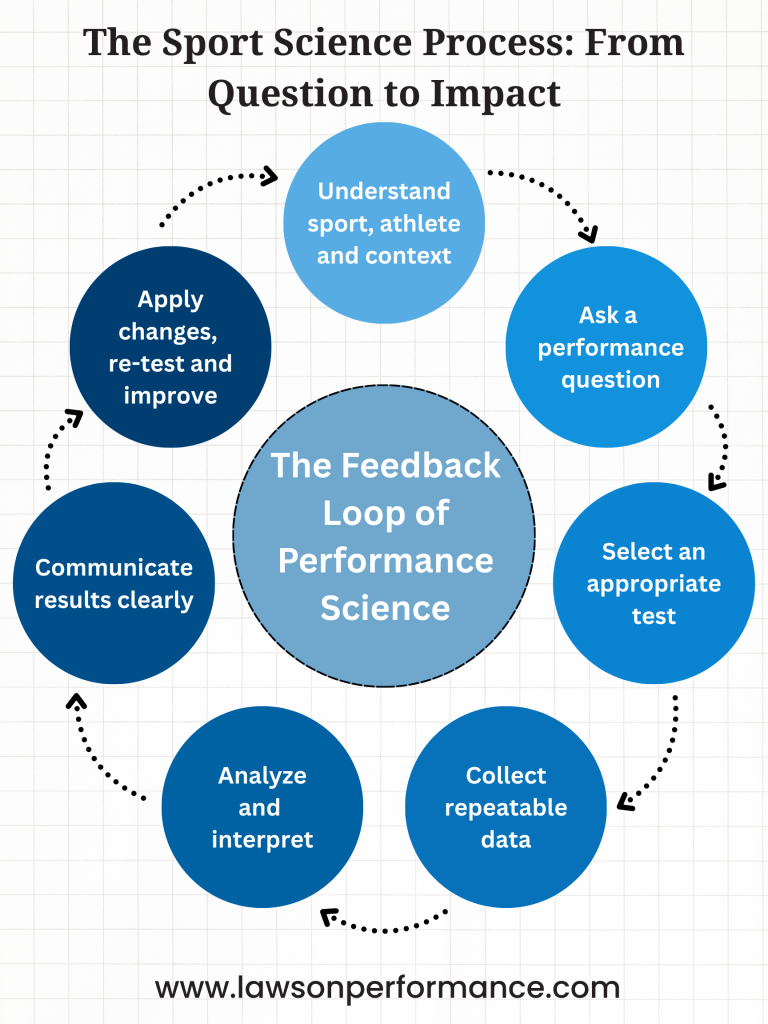
The Sport Science Process
Understanding the Sport, Athlete and Context
Before touching any tech or setting up a testing battery, you need to have a solid understanding of the sport, the athlete and the context that you’re working in. Though we may have a ton of ideas of what we could do until we understand the world that we are working it, it won’t have the impact we’re looking for.
Gaining an in-depth understanding of the demands of the sport should be your starting point. A thorough needs analysis of the energy systems, neuromuscular qualities, movement patterns, competition schedule, injury risks will provide a direction to start looking.
You’ll also need to know an athlete’s role within the sport. This could be at the individual level or based on position(s) or role(s) within the sport. Understanding the nuances from the athletes’ perspective is a huge plus.
Finally, grasping the training environment will often provide insights into low-hanging fruit that can be investigated quickly and have impact. This will entail gaining an understanding of the program’s resources, technical and tactical philosophies, competition and practice schedule, and support staff available.
Understanding Context in Practice: Snowboard Halfpipe
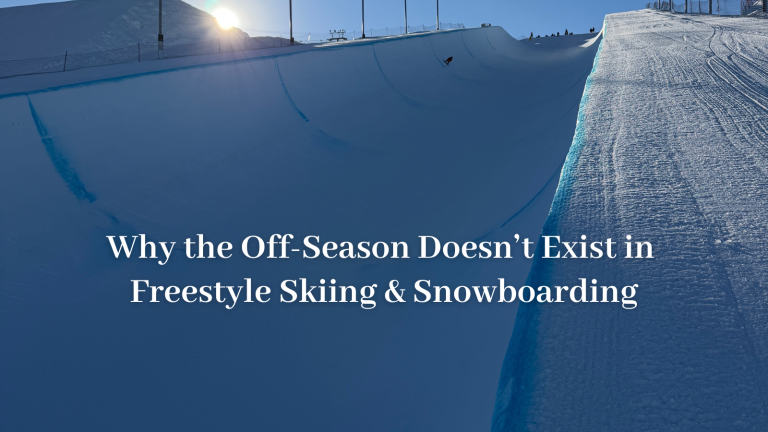
Snowboarding is an asymmetrical sport, with your feet locked into your board at a specific toe-out angle, while looking forward over your front foot. While snowboarding in a halfpipe (think Shaun White) you have to use the edge of the snowboard to hold a specific line up the halfpipe wall to take off at the right angle and with the right speed and body position.
Holding your edge required controlling the toe-heel edge torsion of the snowboard.
The athlete has history of ankle ligament injuries from snowboarding and skateboarding. There is a guess that this is impacting their calf strength and thus holding their toe side edge while riding up the wall.
An upcoming winter training camp will likely have icy snow conditions due to the time of year, altitude and temperature, compared to the slushy snow conditions usually found in the summer. The icy snow will make it harder to hold an edge. The athlete needs to learn a new trick, in which it is imperative to hold the toe edge correctly.

Asking a Clear Performance Question
Once you’ve understood the athlete, the sport and the context you can start forming a performance question and hypothesis. This will provide a ‘why’ behind your sport science investigation.
A good, clear sport-performance question will have these qualities:
- Specific to the athlete or team
- Anchored in their sport, context and progression
- Grounded in context
- Informed by the needs analysis previously performed, and is seasonally-relevant
- Relevant to performance
- Tied to an ability that influences training or competition outcomes
- Testable
- Can it be accurately evaluated with available tools, tests or observational methods
- Progress-based
- Tied to a specific timeframe or progression marker
Your performance question will allow you to determine a testing, monitoring or training protocol that is the main action point for your sport science investigation.
Examples:
- “Is this athlete’s power output improving as planned during our preseason training block?”
- “Is the increase in practice volume allowing for enough recovery within the team?”
- “Do the seniors on the team have a different eccentric utilization ratio compared to the freshmen?”
Selecting the Appropriate Measure or Test
Once we have our question sorted, it’s time to figure out how we will answer the question.
This will require some form of data collection, tracking or monitoring based on the independent and dependent variables that arise from our question(s).
Available technology will often drive the choice of test, but it is important to remember that technology is just a facilitator of data collection and using expensive tech does not guarantee worthwhile testing
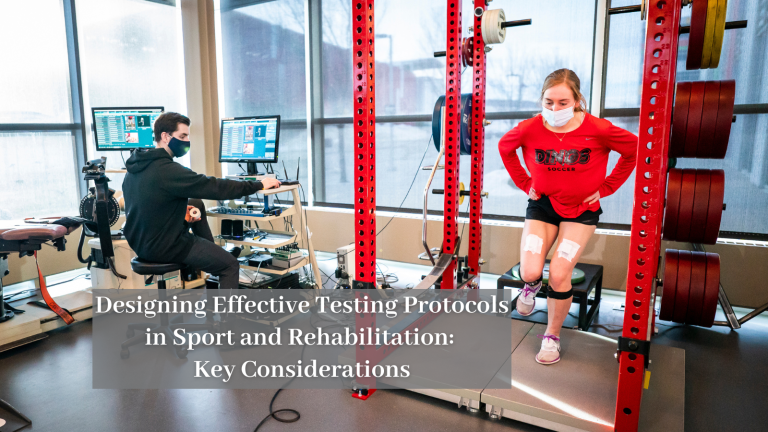
You’ll want to ensure that your tests are valid, reliable and have well planned operating procedures so you get the most out of the results. For that reason, I’ve put together an overview of the 4 key considerations for test protocol design.
Examples:
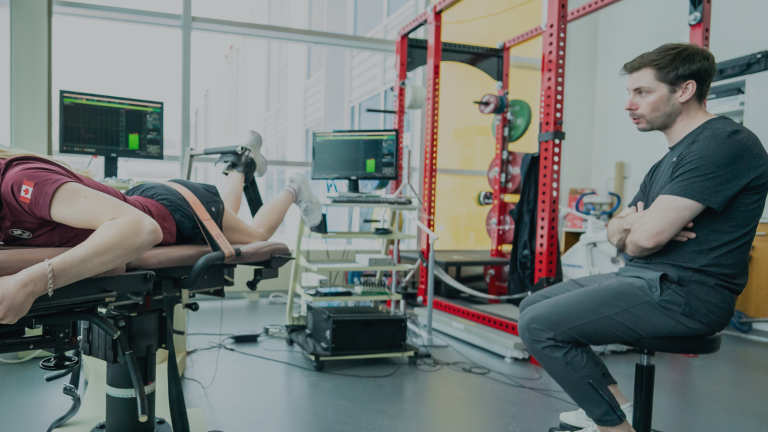
- Assessing isometric, concentric and eccentric bent knee ankle plantarflexion/dorsiflexion on an isokinetic dynamometer
- Creatine kinase concentration levels in blood
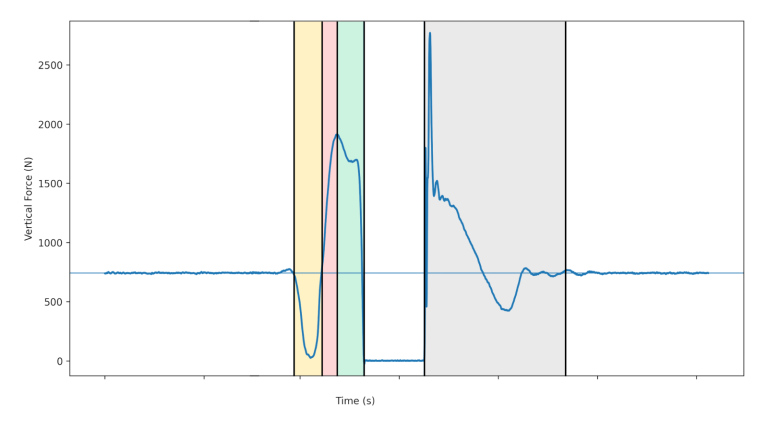
- Squat and countermovement jumps performed on force plates
Potential Sport Science Test Options
Physiology
- VO₂ max test
- Lactate threshold
- Heart rate monitoring
Biomechanics
- Video analysis
- Force plates
- Motion capture
Performance Output
- Sprint timing gates
- Jump tests
- 1RM strength testing
- Dynamometry
- FV profiling / bar speed tracking
Load & Recovery
- GPS tracking
- RPE (rating of perceived exertion)
- Wellness surveys
- Blood analysis
Collecting Standardized and Repeatable Data
Your inferences can only be as good as the data that is collected.
If your data is inconsistently collected or untrustworthy, then it cannot be reliably applied to your question, no matter how expensive your technology is or extensive your testing battery is.
To ensure data quality and repeatability, you must set up both the athlete and the testing environment the same way each time. That’s where Standard Operating Procedures (SOPs) and practitioner clearance pathways become essential.
SOPs should be detailed enough that any qualified practitioner can follow and get consistent results. Note, that this applies to collecting survey based data, too.
However, I’ve seen it many times that an intern or someone unfamiliar with a lab, certain technology or a test are given the SOP document and allowed to run wild. SOPs are not a replacement for hands-on training.
This is a recipe for disaster.
A leader in the space should work with staff to ensure each person that is responsible for data collection is held a set standard. This process should involve observation of testing, supervised and unsupervised protocol practice, and evaluation before clearance to collect data.
SOPs should include:
- Pre-testing guidelines
- fatigue management guidelines, preferred order in a testing battery
- Warm up protocols
- Specific exercises (and sets/reps), durations,
- Equipment setup
- Placement, calibrations, angles, tech syncing
- Verbal cues
- Specific wording to be used for each rep/trial
- Reps/trial standardization
- Number of reps, identification of valid trials
- Data wrangling
- Exporting, file naming, saving location, software version control
- Reporting format
- Analysis method, how to create the report, what data is included
Analyze and Interpret Data, with Context
There are a million ways to analyze a data set. The method you choose must be anchored to the performance question that you are investigating.
Like good research, your analysis should be guided by intent. Ideally, you’ll determine the key variables and metrics before you collect data. This helps to avoid fishing for significant results or yellow flags that simply confirm your biases.
And if you repeat your tests, as you should, then it keeps the reported variables consistent which will help with your communication of results.
We want to move beyond a single number evaluation.
Testing data is multi-dimensional.
For instance, there’s more to someone’s force plate jumps than just how high they jumped.
You can gain a ton of insight from their performance and strategy metrics and gain deeper understanding by investigating how the metrics interact with each other.
Data interpretation will depend on the question you ask.
Your question will determine if the best score (highest or lowest, depending on the variable) or average is the one to be reported. Variability between trials may also be relevant to include.
For example, if you want to rank a team based on jump height, you’ll use max jump height. If it is a rehab setting and you want to see if someone can repeat their max effort jump, then you might look at both max jump height and average across the trials.
Benchmarking Data
Benchmarking Data: Making Meaning from Results
Your interpretation is more meaningful when it’s relative to something.
Athlete vs. Self
- Previous testing blocks
- Pre-injury baselines
- Phase of season
Athlete vs. Team
- Rank within team
- Comparison to positional peers
Athlete vs. Norms
- Published benchmark data
- Internal organization standards
Athlete vs. Current Context
- Impact of fatigue/load
- In-season vs. off-season
- During vs. outside of competition blocks
Your interpretation will draw from statistical reasoning, domain-specific knowledge, and the depth of experience you have with similar data sets.
Finally, the context of the test needs to be considered in the interpretation. This is the nuance that separates an applied sport scientist from someone that can run a few tests.
Communicating Clearly to Turn Data into Action
Communicating results is the key step between testing an athlete and having an impact. Done well, communication leads to changes in programming, deeper inquiry, and team-wide clarity on next steps.
Your communication method should be robust and remain strongly tied to your original question.
Visuals are the easiest and most straightforward method to communicate changes over periods of time and identify trends.
Dashboards provide an immersive environment that allows people to explore the data, but can let people wander towards noise. Whereas, PDF reports can keep things focused, repeatable and provide familiarity.
Short written blurbs can also flag key points or provide brief updates on progress or athlete well-being, particularly in athlete monitoring cases.
One missed opportunity that I often see in teams at all levels, is skipping a testing debrief. Getting staff together to go over the results provides so much more value than sending off a PDF and an email, and is low-hanging fruit. These meetings allow for nuance to be discussed, what the next steps could be, further inquiry into why the results matter, and often lead to new developments in testing protocols and experimentation.
Common mistakes to avoid when reporting:
- Including so many metrics and visuals that you bury the key results
- Assuming the reader understands your visuals. They don’t live in your reports daily, like you do
- Failing to include a “so what?” that prompts action
Communicating allows integrated support teams to remain on the same page, be up to date on athlete well-being and performance, and make meaningful changes to the program for the betterment of the athletes.
Apply Changes, Re-Test and Improve Athlete Performances
Testing isn’t an end point; it is a key cog in the feedback loop of high performance.
Your testing process should always lead to a next step. That might mean an intervention, adjustment, or staying the course. Either way, we must ensure that we apply what we learned. Application is what gives testing its value.
When a new strategy, intervention or training focus is introduced, retesting becomes critical. It closed the loop and begins the next one.
Each time through the loop helps you evaluate effectiveness refines your approach.
Retesting doesn’t always mean a full battery. A targeted follow-up test may be all you need to re-assess a key component, or to answer your next question. Over time, you’ll continue to iterate your protocols based on:
- Evolving goals
- Athlete development
- Team context
- Practical constraints
The key here is to continue to stay rooted to and frame questions around improving athlete performance in their sport, not novelty. The goal isn’t better test scores. The goal is better athletes.
Keep the main thing, the main thing.
Final Thoughts: Sport Science as a Feedback Loop
Sport science isn’t about collecting the most data or buying the latest tech. It is rooted in collecting the right data, for the right reasons, and applying it in a manner that moves athletes forwards.
The 7-step process presented here is a repeatable and applicable framework that can be used across sport settings for better inquiry, analysis and application. Sport performance departments can be confident in making performance-driven decisions based on this method.
Data collection is a tool that, when used well, turns everyday training into an iterative process of learning, adapting and improving so long as you stick to the foundational components of sport science:
- Ask good questions
- Collect quality data
- Communicate clearly
- Apply what you learn
- Repeat
🚀 Want to Build Better Testing Systems?
I’m exploring ways to support coaches, S&C professionals, and sport scientists who want to run more effective, data-driven testing. If this article resonated with you, I’d love to hear how I could support you or your organization.