Data Collection Clearance Is Missing in Most Sport Science Labs
Walk into most sport science labs and you’ll see expensive equipment, well-designed testing protocols and robust dashboards that track more metrics than you can reasonably care about.
From the outside, everything looks sophisticated and dialled.
But the reliability and credibility of a high-level sport science lab doesn’t come from the equipment.
It comes from the people conducting the tests.
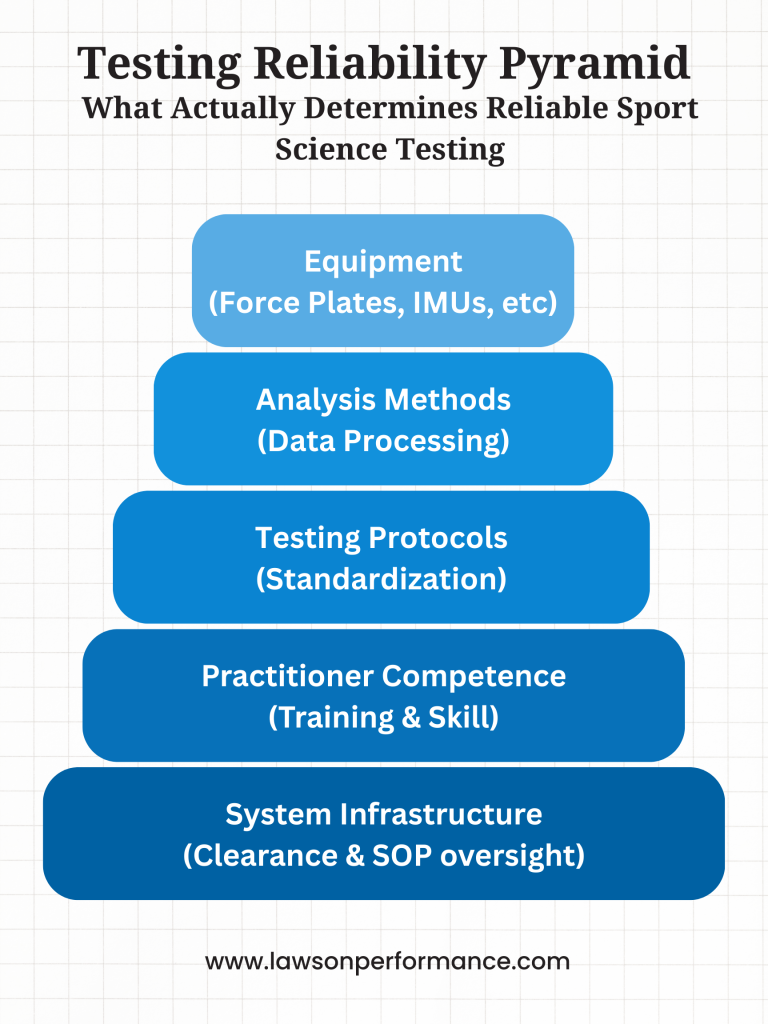
Without structured clearance processes and practitioner education, even the most advanced labs can quietly produce inconsistent data. And when this happens, the entire purpose of testing …and of having a sport science lab starts to collapse
The Problem Most Labs Don’t Talk About
High performance labs rely on repeatability of their processes.
The same protocol performed with the same set up, and data collected to the same standards.
In many environments, this consistency breaks down over time.
Any number of small changes in a lab can add a leak to the system: staff turnover, new interns, different interpretations of a protocol, tight schedules leading to shortcuts.
Over time, these small leaks introduce variability into a lab that make testing data far less trustworthy than people assume.
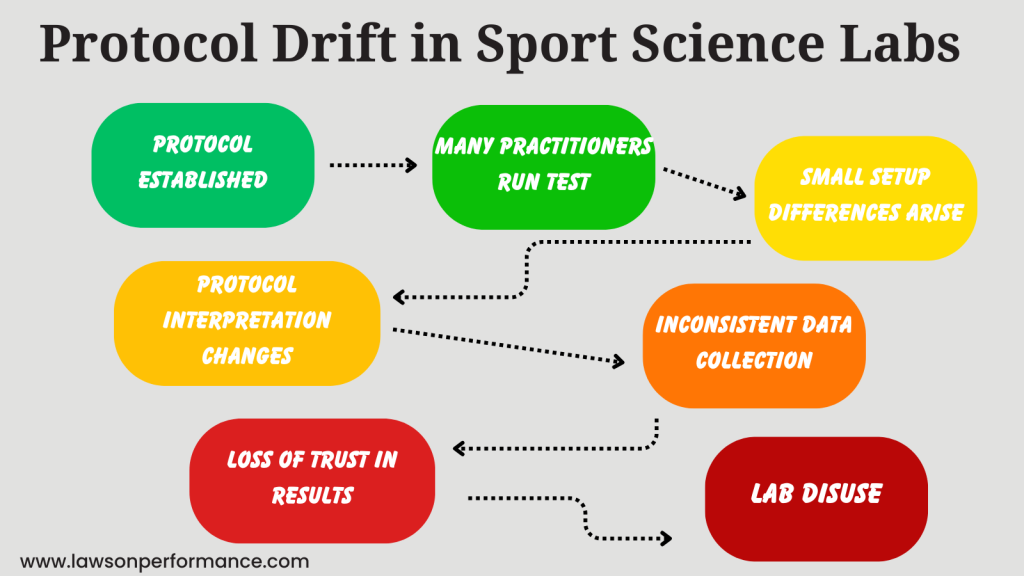
From the outside, though, the system still looks like it’s running smoothly.
The reports still look clean, numbers are in the same ballpark and conversations are still happening.
In the background, the integrity of the data quietly erodes.
This is why a lab director needs to keep their finger on the pulse of the day-to-day of the lab to prevent a drift in testing protocols.
How to Implement a Clearance System in a Sport Science Lab
Clearance simply means that practitioners have demonstrated the ability to run a testing protocol to the required standard before being responsible for data collection.
The goes beyond creating a Standard Operating Procedure for a test. SOPs can serve as starting points and reminders, but the education and clearance process needs to go deeper than a sheet of paper.
Practitioners need to understand:
- how a protocol is performed
- why each step matters
- common errors that occur during testing and their impact on data
- how to maintain consistency across sessions
Without this understanding and depth, variability will inevitably enter the system.
The goal with clearance frameworks is that practitioners show confidence and competence running tests before they collect ‘real world’ data.
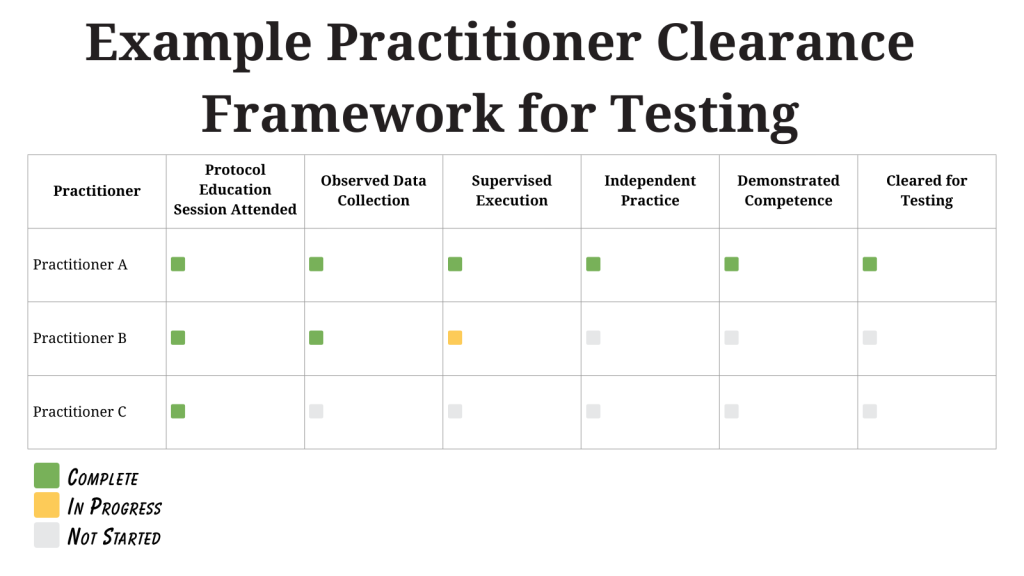
The clearance system does not need to be complicated, but my experience indicates it needs a few structural steps.
1. Maintain a clearance record – to track which practitioners are cleared to run which tests.
2. Build a training and sign-off process – new staff should be trained and demonstrate protocol competency before collecting data independently.
3. Review protocols regularly – testing systems evolve, and staff education should evolve with them.
4. Reinforce the purpose – Clearance should not be seen as bureaucracy, but as a mechanism for protecting athlete outcomes and data integrity.
What Happens When Clearance Works
When clearance and practitioner education are built into a testing program, several things change.
Staff confidence increases because expectations are clear and processes and thorough.
Athletes see a more professional testing environment that is consistent each time they enter.
And most importantly, data quality improves. This increases confidence in the lab and leads to a great impact for the lab on the sport system.
If You’re Building a Sport Science Testing System
Designing reliable testing environments is something I work on regularly with teams, practitioners and organizations.
If your program is trying to improve testing consistency, practitioner education or quality control systems then please feel free to reach out.
These are exactly the kinds of problems I enjoy helping solve.
Want to Build Better Lab Systems?
I’m exploring ways to support coaches, S&C professionals, and sport scientists who want to run more effective, data-driven testing. If this article resonated with you, I’d love to hear how I could support you or your organization.