Designing Effective Testing Protocols in Sport and Rehabilitation: Key Considerations
Objective testing plays a crucial role in guiding decision making, from return to sport status, mesocycle focus and even selection to a team. Designing your testing protocols and batteries goes beyond using the latest tech or mimicking what was shown on pro team’s social medial. Your testing should have clear purpose, executional consistency and be context-specific. The decisions made about the tests selected and the protocols utilized will directly impact the usefulness of your data.
Below, we will walk through the key factors that you and your team should consider when building a testing battery that is scientifically sound and operationally feasible.
Outcome-Driven Testing
All testing discussions should start with the end in mind: what are you looking to learn or impact by doing these tests? The answer to this question will often direct our next steps and help you whittle down the list of possible test options.
Generally, your desired outcome will be a better understanding of an individual’s or team’s, physiological capability. Broadly, this could be in an aerobic, anaerobic, strength, power, explosiveness or fatigue bucket.
You will also want to pre-emptively know what you will use the testing results for. This could impact exercise selection in the next training cycle, indicate a time to shift to a different training focus, clearance for the next return to sport progression or ranking athletes within a team.
A needs analysis is a key place to start:
- Are you working with a post-op ACL athlete needing quantifiable limb symmetry data?
- Is your goal to understand neuromuscular fatigue across a team mid-camp?
- Do you need a general athleticism screen or a detailed performance profile?
What is the function of the results:
- Tracking progression over time
- Identify deficits
- Create healthy baseline data for future comparison
- Inform training readiness
Time, Setup, and Practicality
A great testing protocol on paper can fail in practice if the logistics are unreasonable. This is an especially important consideration in high-performance environments where some of the best technology is available but athlete and team schedules are tricky to navigate.
There is a give and take when it comes to choosing between gold-standard testing vs. field testing or proxy testing. Generally, the trade is between greater certainty of results and the ability to test more people or accrue results in a more practical way.
It should come as no surprise that your ability to dive-deep and use more labour intensive protocols will be greater if you’re working in a one-on-one return to sport environment, compared to evaluating fitness of 50-70 athletes in a team tryout camp.
Here are a few things to consider:
Time Required Per Athlete:
A big issue I see in the Olympic training environment is the request from sport organizations to do multiple tests that provide more or less the same information because they have access to the equipment. This can result in a test battery that is repetitive, exhausting and drags on long beyond what is needed.
The battery should be exactly as long as is needed to fulfill the objectives and obtain the pertinent information that will drive change.
For this reason, professional sport leagues, like the NHL, have strict rules on when players can be tested, and how long that testing is allowed to last.
Set Up Time and Time Between Athletes:
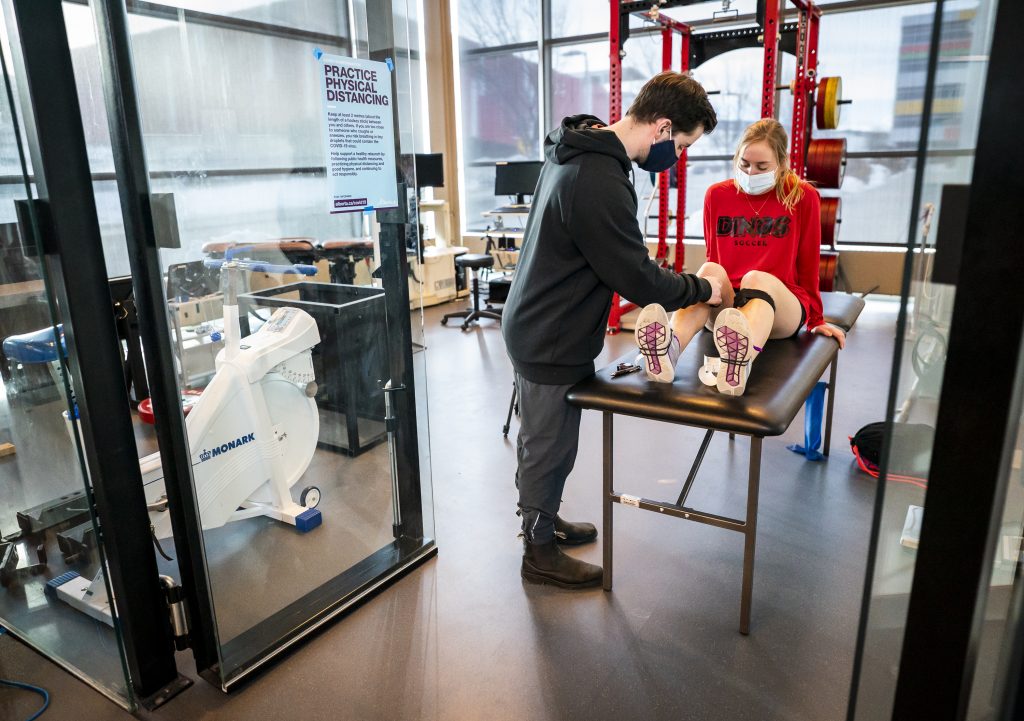
I’ve been in situations where dynamometry testing takes 45 minutes, and an athlete is scheduled to start every 45 minutes for 6-8 athletes in a row. The lack of time between athletes meant that everything had to work and run smoothly, which isn’t a fair situation to put a practitioner or athlete in (no time for bathroom breaks!).
Deep Dives vs. General Overview of Abilities:
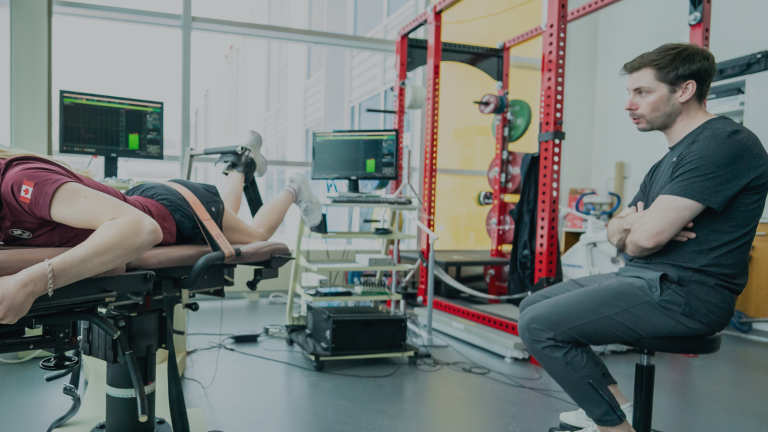
One major component of test protocol is the granularity needed for your outcome. For instance, do you need to know the exact peak torque and rate of torque development in the quadriceps, in which case dynamometry would be advised, or is having someone perform a max effort knee extension test on a metronome enough to give you what you’re looking for?
In rehab contexts, a deep dive into the strength and power ability of an athlete is warranted. While getting a general overview, or proxy, for lower body strength may be enough to give us an idea of strength for a newly appointed member of a provincial team.
The ability to do a deep dive is great to have, but isn’t always needed. Again, this comes back to what information are you looking to ascertain and what decisions will be made with the information.
Environment and Available Tech:
Although force plates are becoming more mobile by the year, it might not make sense to move your multiple thousand dollar force plates to a field environment to assess jump height. Implementing a VERTEC jump test instead is probably the more logical solution in most situations.
Protocol Consistency: Repeatability and Accuracy
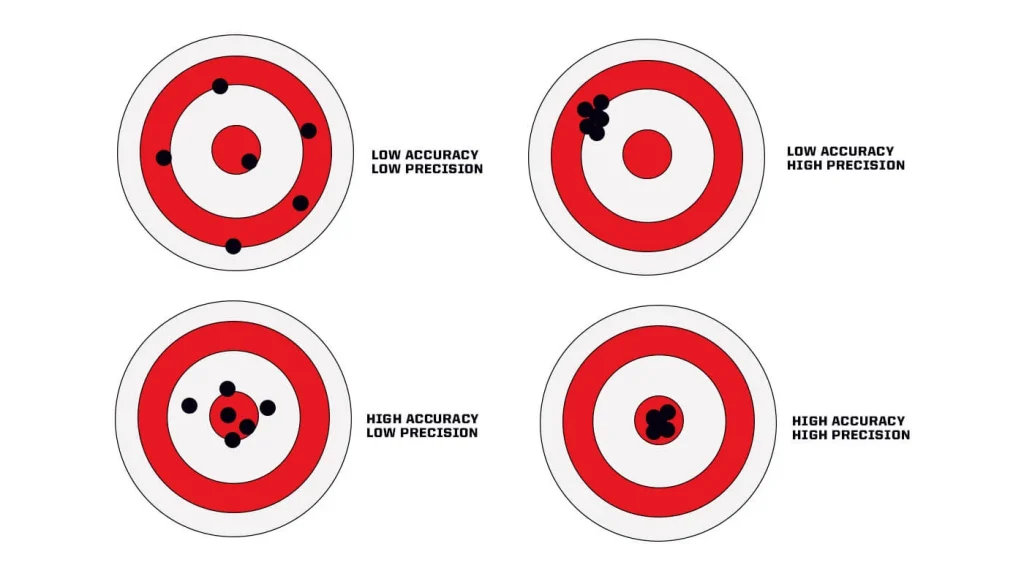
One of the foundational components of a good test is for it to measure what it is supposed to measure and do it consistently. A repeatable, valid and accurate assessment is the only way to be able to trust the data and use it to make informed decisions based on the outcome.
The way that the testing protocol is written and executed plays a large role in the repeatability and accuracy of the test itself. This is where a complete, well-documented Standard Operating Procedure is key. Your SOP will be the checklist to ensure the test is set up and administered the same way each time.
Additionally, ensuring that practitioners are trained, observed, and provided with feedback from senior practitioners that developed the SOP is an often overlooked part of protocol execution and testing bandwidth.
Further, an athlete must be able to repeat the test on a consistent basis. Therefore, the test shouldn’t be uncomfortable (though in some rehab contexts this may be a finding in and of itself), they should be at approximately the same level of fatigue each time they’re tested, or on a consistent day. These types of factors, when uncontrolled, can bias the testing outcome.
Impact of Protocol on Test Execution and Results
This is an area that I find to be most overlooked. We may see a protocol on social media or in a research paper and implement it, without considering the impact of the protocol itself on the outcome.
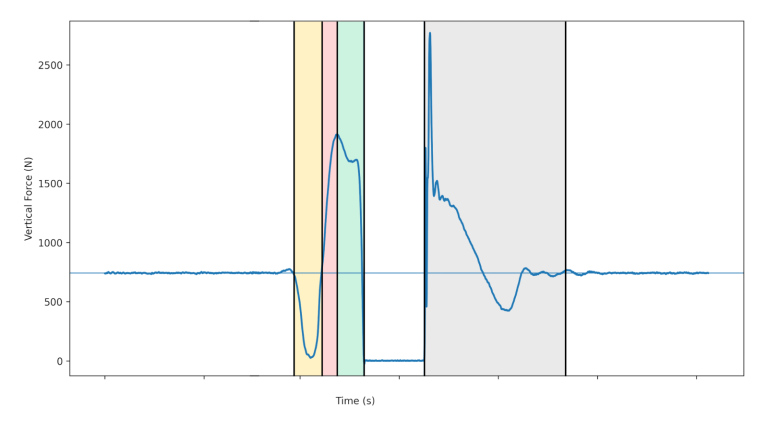
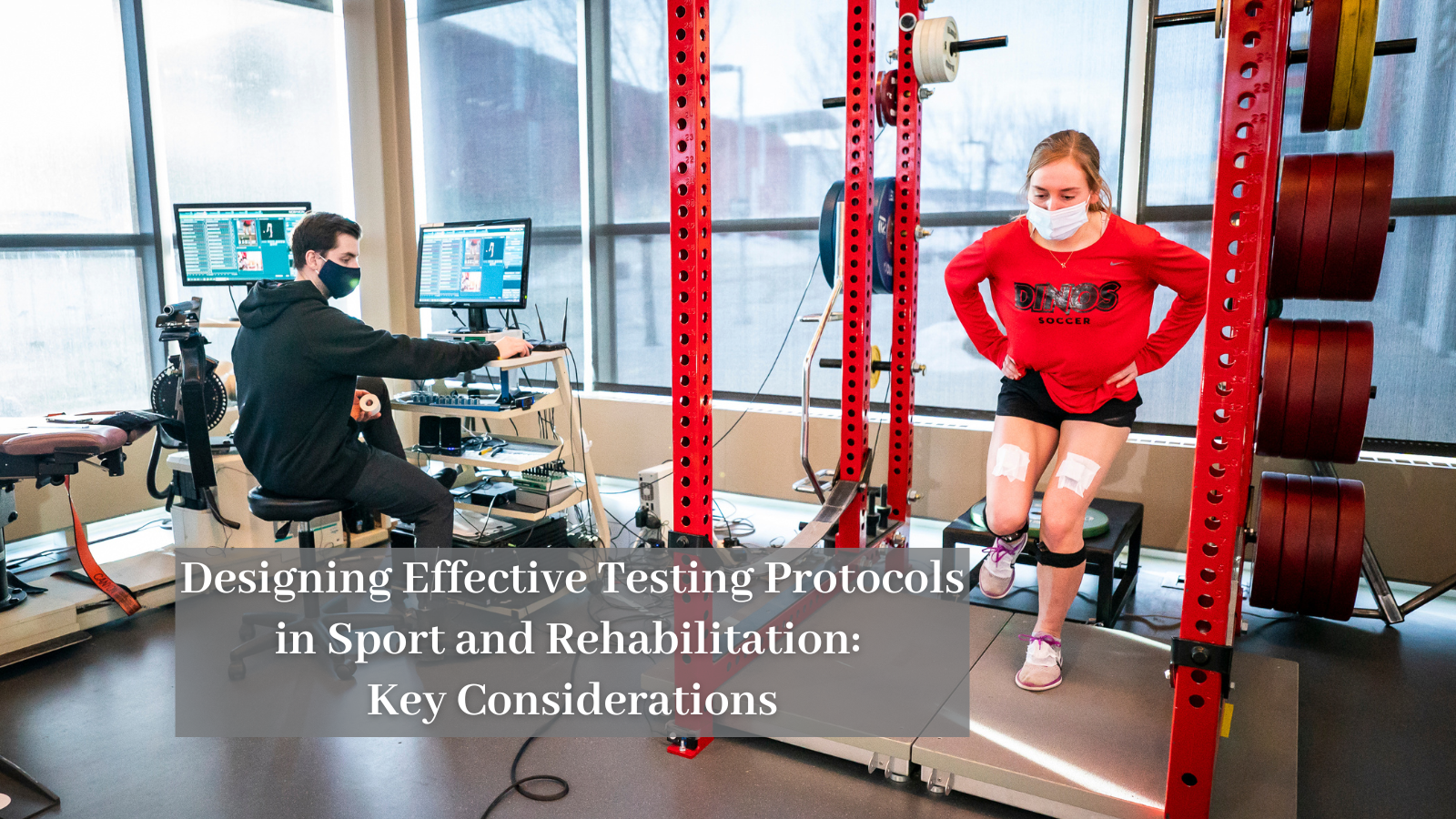
Much of my MSc research focused on the impact of protocol instructions on results. For instance, we found that a landing assessment initiated by a step-off of a surface was significantly altered depending on which leg initiated the step off. Further, we found that people lowered their center of mass significantly when stepping off an elevated surface to decrease the landing demands and energy absorption required.
Depending on your battery, you may run into a fatiguing effect whereby the results of later tests are impacted by earlier ones. Anecdotally, I’ve seen this in long dynamometry sessions where multiple types of contractions and speeds are utilized. Muscular fatigue can build up, in addition to athlete/subject apathy due to the repeated nature of the tests.
Fatiguing effect of tests are also key consideration when developing the order of tests. Here, you’ll want your most fatiguing test (e.g., beep test, VO2 max bike) at the end of the battery, with explosive or power based tests earlier. It’s also important to try to alternate upper and lower body tests, if possible, to increase recovery.
Test instruction considerations:
- Dynamometry: instructions to contract ‘hard and fast’ or ‘fast and hard’ will result in different peak torque and rate of torque development values (Source)
- Drop Jump: jumping ‘as high as possible’ vs ‘as fast as possible’
- Landings: land quietly vs. reach stabilization quickly
Final Thoughts:
Designing testing protocols isn’t about chasing the newest equipment or copying what high-level teams are doing on social media, it’s about clarity, consistency, and context.
Whether you’re working with a single post-op athlete or screening 60 athletes at a training camp, your testing should reflect the questions you need answered and the decisions you need to make.
Before your next round of testing, ask yourself:
- What are we trying to measure, and why?
- Is this test logistically realistic and repeatable?
- Will the results actually inform our next steps?
If you can answer those questions with confidence, you’re on your way to a protocol that delivers real value, not just data.